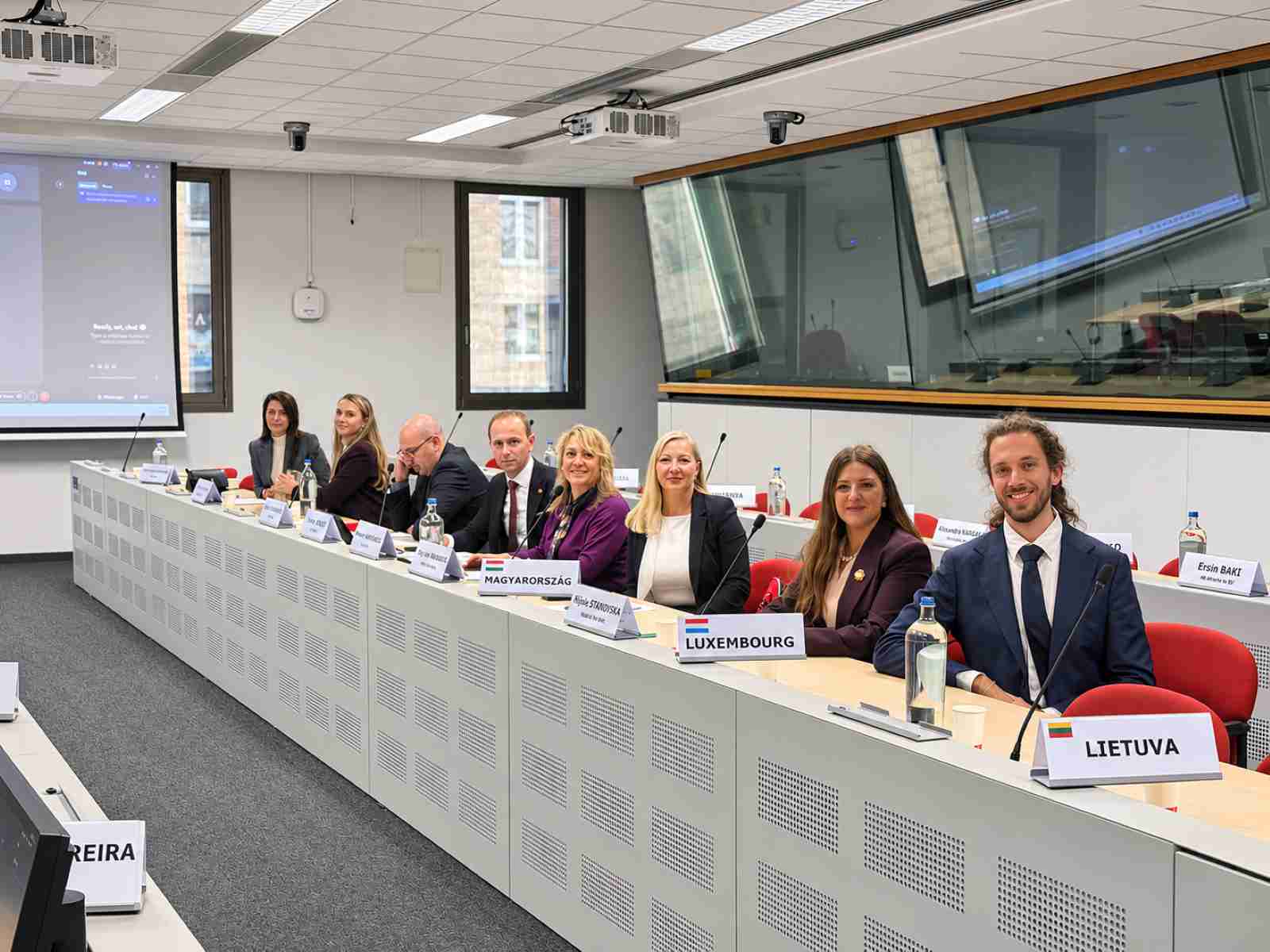
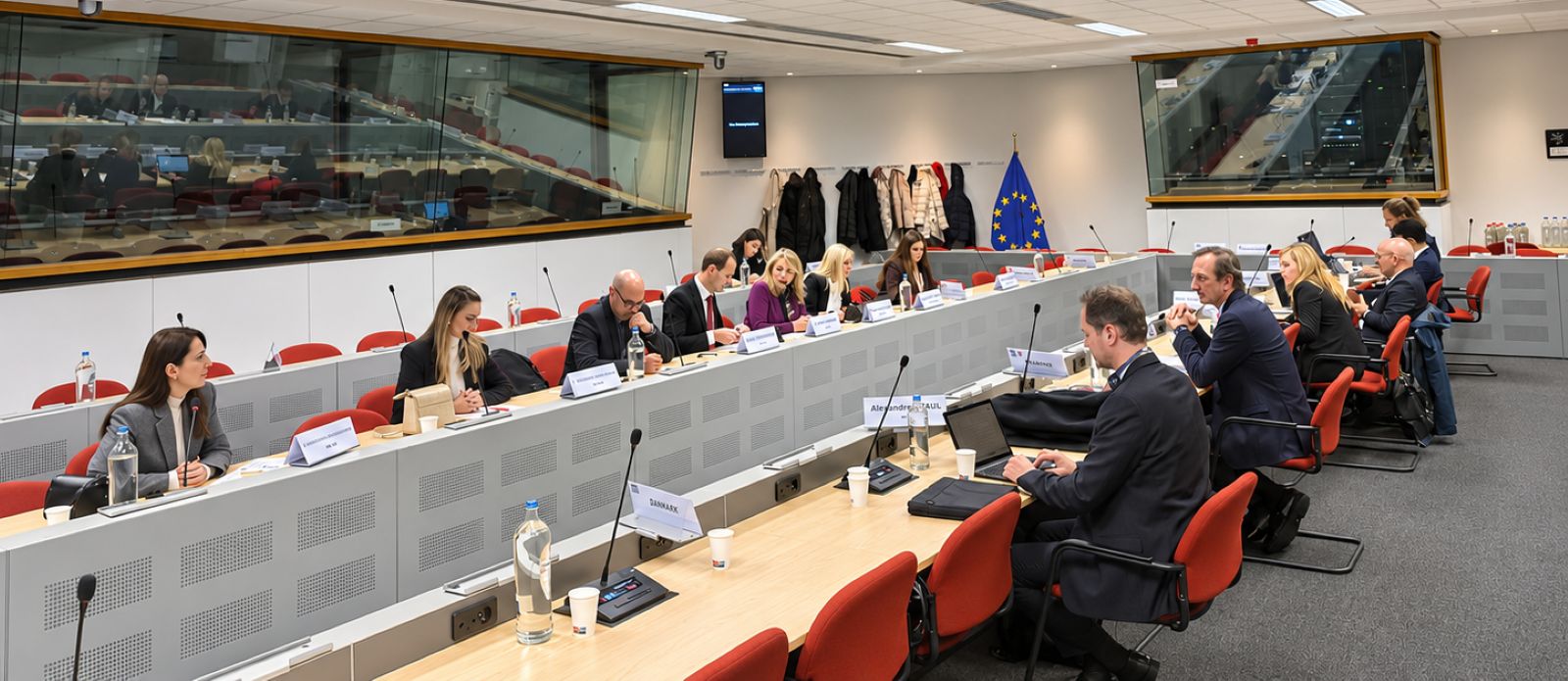
On October 30, 2026, the twenty-second meeting of the Subcommittee on Trade, Industry, Customs and Taxation between the Republic of North Macedonia and the European Union was held in Brussels, within the framework of the Stabilization and Association Agreement.
The meeting was co-chaired by Mr. Jumni Ademi, State Secretary at the Ministry of Economy and Labour, on behalf of the Republic of North Macedonia, and the Team Leader at the Directorate-General for Enlargement and Eastern Neighbourhood, Mr. Frederick Swinnen.
State Secretary Mr. Jumni Ademi highlighted the Government’s commitment to implementing reforms and harmonizing national legislation with EU acquis communautaire, as well as the active implementation of the Reform Agenda within the framework of the 2024–2027 Growth Plan. He particularly emphasized the importance of continuous dialogue with the European Commission through the Subcommittee.
During the meeting, the country's progress in the areas of tax policy, customs operations, industrial policy, enterprises, tourism, and trade was reviewed, as well as the alignment of national legislation with EU acquis communautaire.
In the area of taxation, the European Commission welcomed the adoption of the legislation implementing the Pillar Two Directive and emphasized the need to develop tax IT systems and the automatic exchange of financial information in line with OECD standards. In the customs area, progress was noted regarding the implementation of the SEED+ system, the revised PEM rules, and the facilitation of customs procedures, with a recommendation for the swift adoption of the new Customs Code.
In the fields of industry and tourism, the preparation of the Industrial Strategy for 2027 and the National Tourism Strategy 2027–2032, as well as the simplification of business operations—with an emphasis on digital and green transformation and regional cooperation—were highlighted. The EU remains the country’s largest trading partner, accounting for 76% of exports and 50.1% of imports. Alignment with EU sanctions against Russia and participation in CEFTA were welcomed.
Regarding the free movement of goods, the Commission emphasized the need for harmonization with European legislation, the strengthening of administrative capacities, and the conclusion of an Agreement on Conformity Assessment.
Both sides reaffirmed the importance of continuing reform activities, strengthening institutional capacities, and intensifying cooperation aimed at further alignment with European legislation and fulfilling the obligations arising from the European integration process.