Skopje, 9 October 2026
The Ministry of Economy and Labour is introducing a new approach to monitoring citizens' cost of living by calculating an average consumer basket based on official statistical data, actual household consumption, and market prices of products and services.
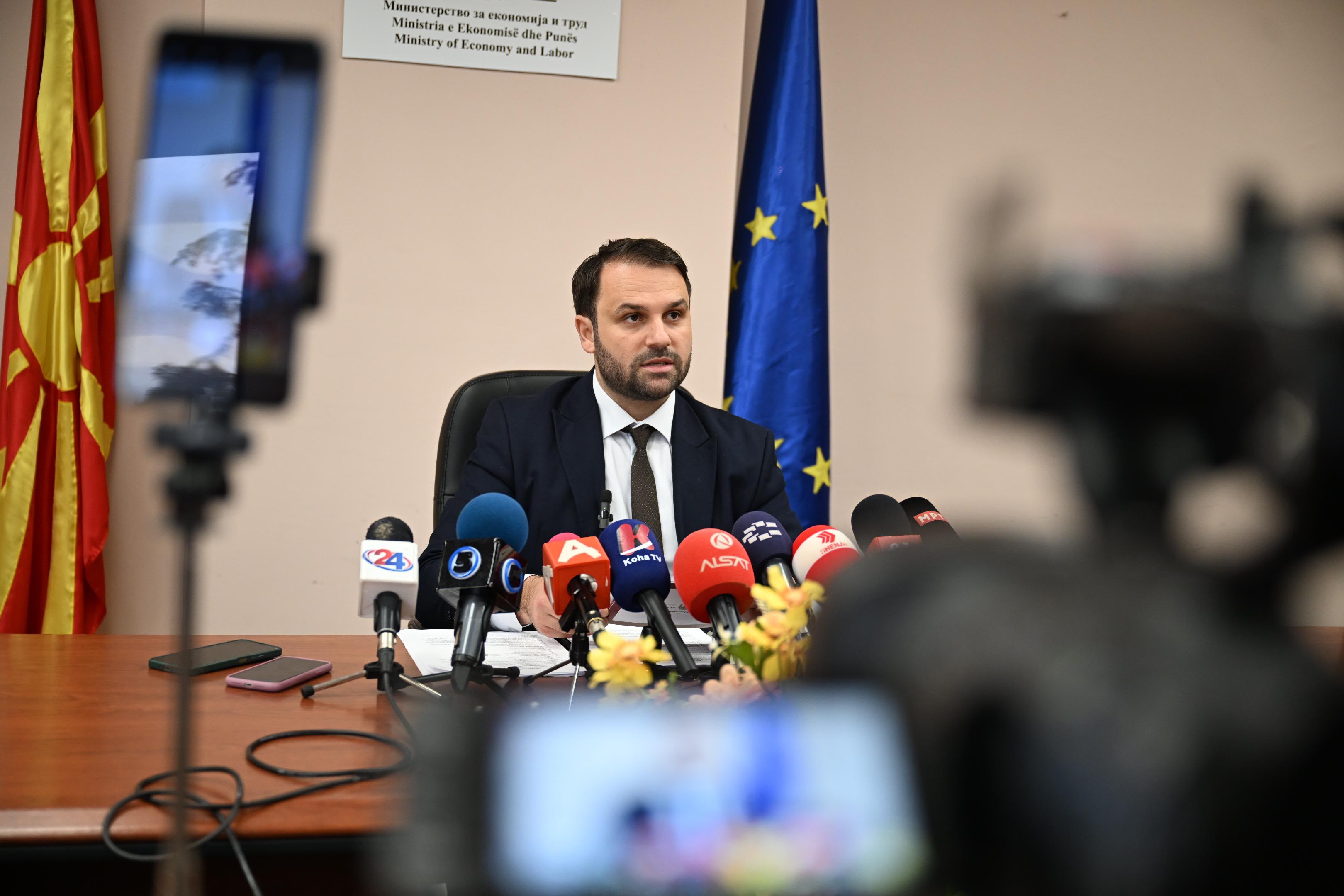
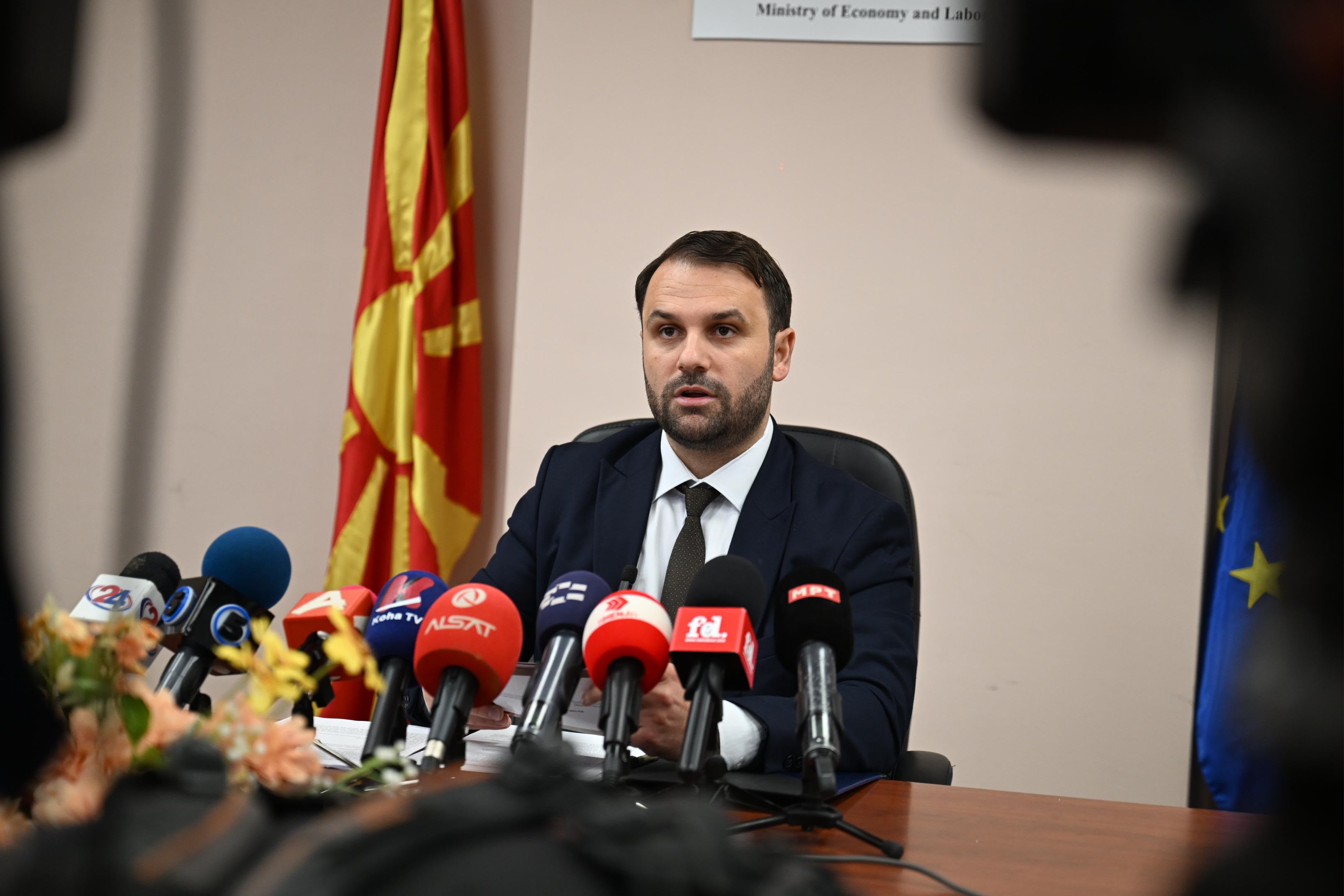
At today's briefing with media representatives, the Minister of Economy and Labour, Besar Durmishi, presented the new methodology, emphasizing that the goal is to provide a realistic, objective, and transparent picture of household expenses in North Macedonia.
"Our goal is clear: to obtain a realistic and objective picture of household spending. Unlike estimates based on desired needs, our methodology relies on data regarding actual consumption, in accordance with internationally accepted statistical classifications," stated Minister Durmishi.
The average consumer basket comprises 11 expenditure categories, including food and beverages, housing, transport, healthcare, education, clothing and footwear, communications, and other goods and services.
The calculation utilizes data from the State Statistical Office, product prices in eight cities, data from 23 fruit and vegetable markets, and prices of the best-selling food products across the five largest and three regional retail chains.
According to the Ministry's calculations, the average consumer basket in August 2026 stood at MKD58.475, representing an increase of just MKD29 compared to July. Meanwhile, costs for food and beverages in August decreased by MKD255 compared to the previous month.
Compared to January of this year, when the basket stood at MKD56.381, the figure for August is approximately MKD2.095 —or 3.7 percent—higher.
Addressing the differences between the Ministry's calculation and the Trade Union's minimum consumer basket, Minister Durmishi emphasized that these are two distinct approaches that should not be directly equated.
The Trade Union's minimum consumer basket for August stands at approximately MKD68.676, whereas the average consumer basket calculated by the Ministry amounts to MKD58.475.
Minister Durmishi pointed out that the trade union methodology is based on estimated needs and includes expenses for alcohol, cigarettes, and rent, whereas the Ministry's methodology tracks actual average household consumption.
Regarding housing, Durmishi cited data from the 2021 Census, according to which approximately 95 percent of the population lives in their own homes.
Discrepancies also exist regarding food and beverage costs, which the Ministry calculates at MKD21.132 for August, whereas the trade union basket estimates them at MKD25.032. Differences are also observed in the categories of clothing and footwear, education, housing, and communications.
"We respect the Trade Unions and their role in protecting workers' rights. However, we must clearly state that we are dealing with two different methodologies. We do not wish to engage in a contest over whose basket is higher or lower. Our goal is not to downplay citizens' expenses, but to provide an objective and transparent picture of consumption," stated Durmishi.
He added that various calculations could be useful to the public, provided there is a clear explanation of what each one shows and the data upon which it is based.
"This does not mean we are disputing the citizens' needs. On the contrary, we believe the public should have access to more relevant data, but also understand exactly what each calculation indicates," the Minister emphasized.
The Ministry of Economy and Labour will continue to closely monitor price trends—particularly for basic food products—in the coming period, while also working on measures aimed at protecting the standard of living and strengthening citizens' purchasing power.
"It is important to us that economic policies be based on facts rather than assumptions. Only with accurate and transparent data can we create policies that address actual economic conditions and the needs of the citizens," stated Minister Durmishi.